
BCRJ Releases Explained
Bourbon County Regional Jail, also styled Bourbon County Regional Detention Center, holds a mixed population. Official Bourbon County material describes state, county, and city inmates, classification services, and work release for suitable Class D or county inmates. That mix affects every release inquiry. “Released from BCRJ” states only that responsibility at this facility ended. It does not by itself show that all custody ended.
A Robertson County detainee may leave BCRJ on bond, recognizance, time served, dismissal, probation, or another court-authorized route. The same person may instead be transported to a Kentucky Department of Corrections institution, another county jail, the U.S. Marshals Service, or immigration custody. Ask for both the release type and destination. A transfer is a release from one custodian, but not a community release.
Confirm a BCRJ Release
The official BCRJ path begins at the jail’s operating website. Its “Current Inmates” link opens the Cadmus current-inmate portal. The label matters. It is a present-custody search, not a historical release list, and the official navigation does not promise a 24-hour or 72-hour release archive.
- Search the current portal by the person’s identifying details and compare more than a name.
- If no current match appears, call BCRJ and ask whether the person was processed out or transferred.
- Search Kentucky VINE for a local-jail record and any separate KDOC record.
- Request the public release portion of the jail inmate file, including time, type, authority, and destination.
- Obtain the relevant bond, dismissal, sentence, or release order from the Robertson Circuit Court Clerk.
- For a state-managed case, cross-check KOOL and the dated KDOC Daily Releases archive.
The sequence avoids a common error. A roster is a snapshot, and names may disappear after several kinds of movement. The full Robertson County released-inmate workflow is described on the home search and release-record page.
BCRJ Records and Contact
For the physical release event, contact the jail that booked and processed the person. The official pages do not publish a dedicated open-record form or identify one email as the statutory records inbox. Call first. Confirm the designated records custodian and current lawful copy charge before sending personal identifiers.
101 Legion Drive
Paris, KY 40361
859-987-2137
s.norris@bourboncountydetention.com
The operating site lists that email, while the Bourbon County services page identifies administrator Sam Norris and also publishes bourboncd@gmail.com. An operational address is not automatically the official request channel. A narrow request should state the person’s full name and birth date or booking number, approximate confinement dates, and the exact public fields sought.
| Requested field | Why it matters |
|---|---|
| Admission and booking number | Identifies the correct confinement. |
| Processed-out date and time | Shows when physical custody at BCRJ ended. |
| Release or disposition code | Separates bond, sentence end, and transfer. |
| Authority or order | Connects the event to the legal basis. |
| Destination or receiving agency | Shows community release versus continued custody. |
Robertson’s Host-Jail Route
Robertson County’s small-county arrangement creates a two-county records trail. Mount Olivet remains the location of the originating county offices and court. Paris is where the evidence points for operational adult detention. Generic directories can blur those roles by placing a “Robertson County Jail” at the courthouse address. That listing is not proof that the person was housed there.
Keep three entities distinct. The Robertson County Jailer’s Office may clarify housing or transport arrangements. BCRJ documents booking, local custody, release, and transfer. The Robertson Circuit Court Clerk holds the order that authorized bond, dismissal, sentence, or another court outcome. When the records agree, they provide much stronger confirmation than a missing portal name.
- Host jail
- The operating facility used by another county for detention.
- Processed out
- The recorded end of one facility’s custody responsibility.
- Receiving agency
- The next custodian named after a transfer.
- Community release
- Departure from secure custody, sometimes with supervision still in force.
BCRJ State-Sentence Releases
Some people held at BCRJ are under Kentucky state management. For them, the Kentucky Online Offender Lookup and KDOC Daily Releases archive add state-level proof. KOOL can show an exact status, location, sentence information, and supervision details. The dated PDFs list a KDOC number, name, release type, released-from facility, and highest felony class.
A BCRJ entry in a Daily Releases PDF can show that a KDOC inmate was physically released from a county-jail bed. It does not turn the archive into a complete list of Robertson bond releases. Conversely, a local pretrial detainee who posts bond may never appear in a state release PDF. Use the channel that matches the legal custody.
BCRJ Release Images Online
The manifest image from the officially linked current-inmate portal shows why the portal should not be read as a release archive.
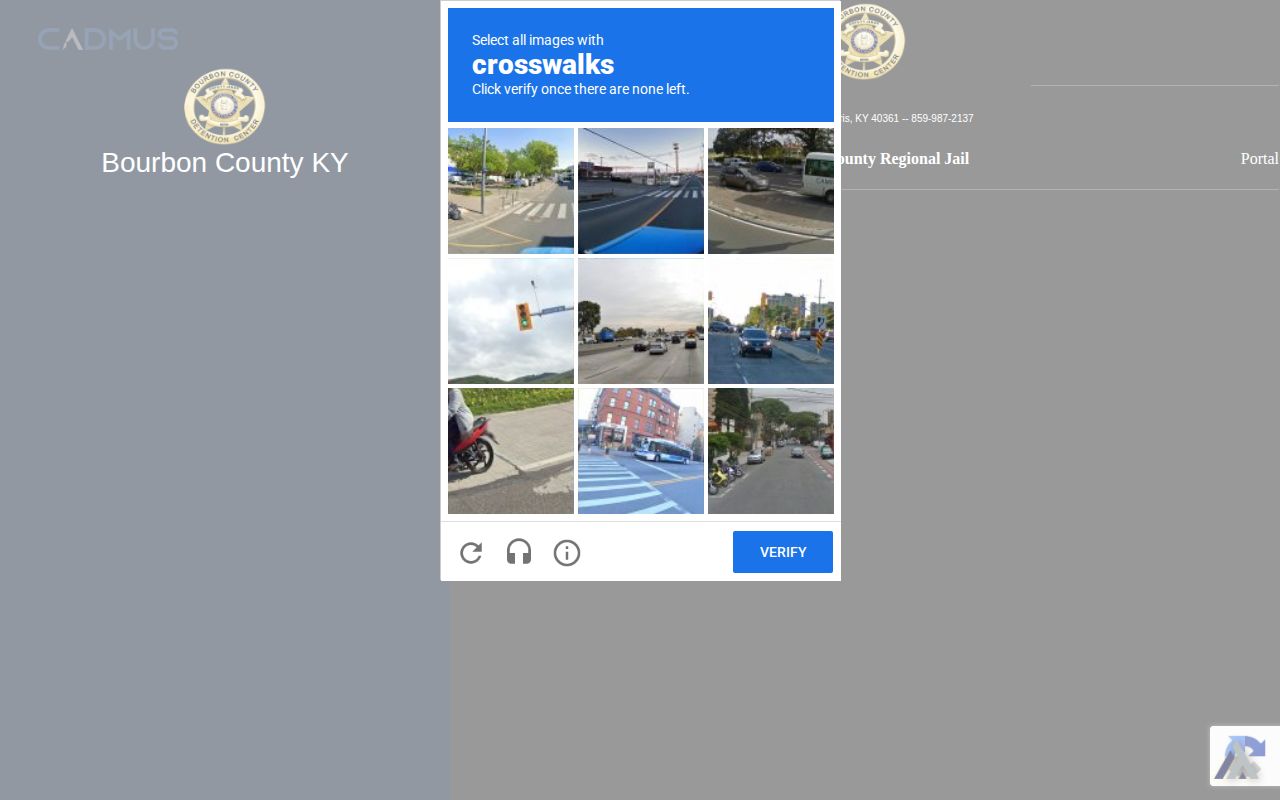
Its current-custody framing supports a first check, while the retained inmate file and court order carry the past-release evidence.
The official Bourbon County services page also documents the regional jail’s contact, administrator, and functions.
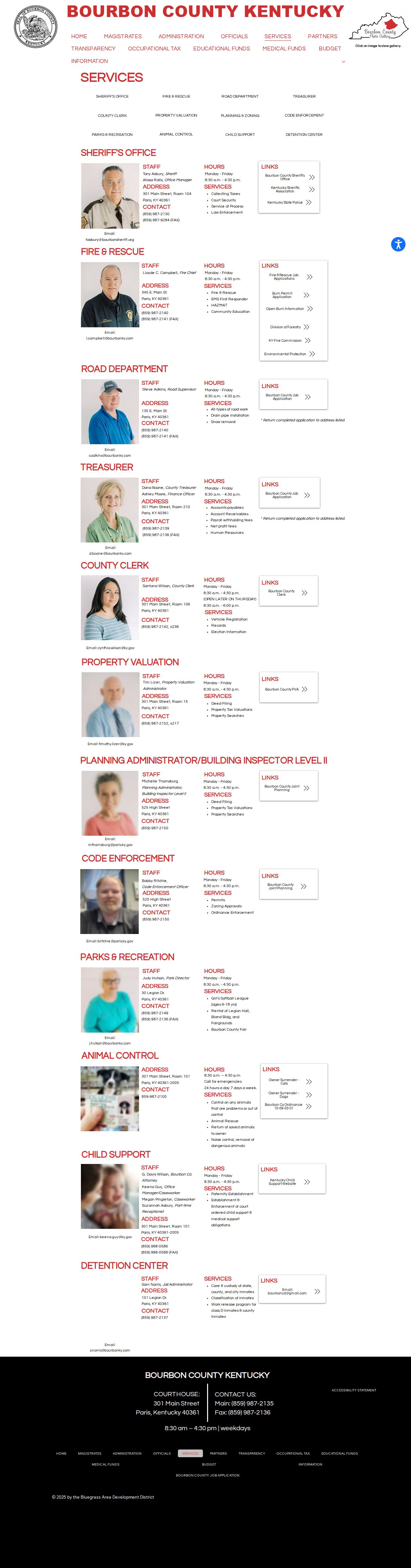
Those official details establish the operating facility without inventing a separate Robertson County lockup.
BCRJ Release Logistics
No reviewed official source states routine release times, an exit door, family waiting rules, property pickup steps, or weekend and holiday practice. Do not plan travel from an unsourced directory. Call BCRJ before leaving and ask for the public admission-and-release policy if the question concerns general procedure rather than one person’s confidential data.
Kentucky’s county-jailer retention schedule indicates that an inmate file may remain for five years after release and can include commitment, classification, release, and photograph material. Transport files have a different retention horizon, and non-evidentiary video can be short-lived. A prompt, focused request is more useful than waiting for an online archive that BCRJ does not publish.
Note: Ask whether the event was a community exit or a transfer before arranging transportation, property pickup, or a meeting place.
BCRJ Release Verification Sources
Each official source answers a different part of the release question. The BCRJ inmate file is the best source for admission, booking number, the time a person was processed out, the facility’s release code, and any destination that staff recorded. The Robertson Circuit Court file can contain the bond, dismissal, acquittal, sentence, probation, or custody-release order that supplied legal authority. Kentucky VINE may report a status change and can send notices, but an automated notice should be checked against the source record. For a person under KDOC management, KOOL and the Daily Releases PDF supply state status and release type.
The distinction also protects against name errors. Match a full name with birth date, booking or KDOC number, photograph when lawfully displayed, case number, and the dates of custody. Common names and aliases can produce a plausible but wrong result. Save the exact label and record date rather than converting it into a stronger claim. “Inactive,” “released,” “transferred,” and “not in custody” can have different meanings across systems.
| Source | Best evidence | Main limit |
|---|---|---|
| BCRJ file | Physical processed-out time and destination | May not explain the court’s legal reasoning |
| Robertson court file | Order authorizing bond or other disposition | May not show the jail’s final exit time |
| VINE | Status notice for a registered local or state record | Can lag or issue an alert that needs confirmation |
| KOOL and Daily Releases | State status, release type, and releasing facility | Not a log of every local booking or bond exit |
If the sources conflict, contact the agency that created the disputed field. Ask BCRJ about its release time or destination, the clerk about a court order, and KDOC about a state status or calculation. This division of responsibility keeps a simple database mismatch from being mistaken for a new custody event.
BCRJ Records Retention
Kentucky’s county-jailer schedule gives the inmate file a five-year retention period after release. The file can include commitment and release forms, classification records, fingerprints, photographs, medical summaries, and other material, although access exemptions still apply. Request the nonexempt public portion and allow redaction. The schedule does not guarantee that every listed field exists in every individual file.
Transport documentation may be retained on a three-year, audit-linked schedule. Non-evidentiary booking or incident video can have a much shorter period, sometimes only thirty days. Those differences matter when the central question is whether someone walked out or was placed in another agency’s vehicle. Make a precise request as soon as the date and facility are known. Include a narrow date range, identify the event, and ask the custodian to state where a denied or missing item would ordinarily be kept.
Note: A focused request for release, destination, and transport fields is easier to process than a demand for the entire jail file.
Public Record Search
Sponsored Results